CSDL workshop explores Flipped Learning and student-centred teaching at UOL
For decades, classrooms have largely been built around a familiar structure: the teacher speaks, students listen, and learning is measured through repetition and recall. Yet as educational models continue to evolve, increasing emphasis is being placed on classrooms that encourage questioning, collaboration, and critical engagement rather than passive absorption of information. It was within this context that the Centre for Skill Development and Leadership (CSDL), The University of Lahore (UOL), organised an interactive “Teacher Training Workshop” focused on Flipped Learning and its integration with Bloom’s Taxonomy.
The workshop explored how contemporary teaching methods can shift learning environments from instructor-centred spaces towards more participatory and student-driven models. By combining the principles of Flipped Learning with Bloom’s Taxonomy, the session examined ways to strengthen analytical thinking, learner autonomy, and classroom interaction.
Unlike conventional lecture-based instruction, Flipped Learning encourages students to engage with foundational material independently before class, allowing classroom time to be used for discussion, application, and collaborative problem-solving. Through this approach, the workshop positioned learning not as memorisation, but as an active process of inquiry and engagement.
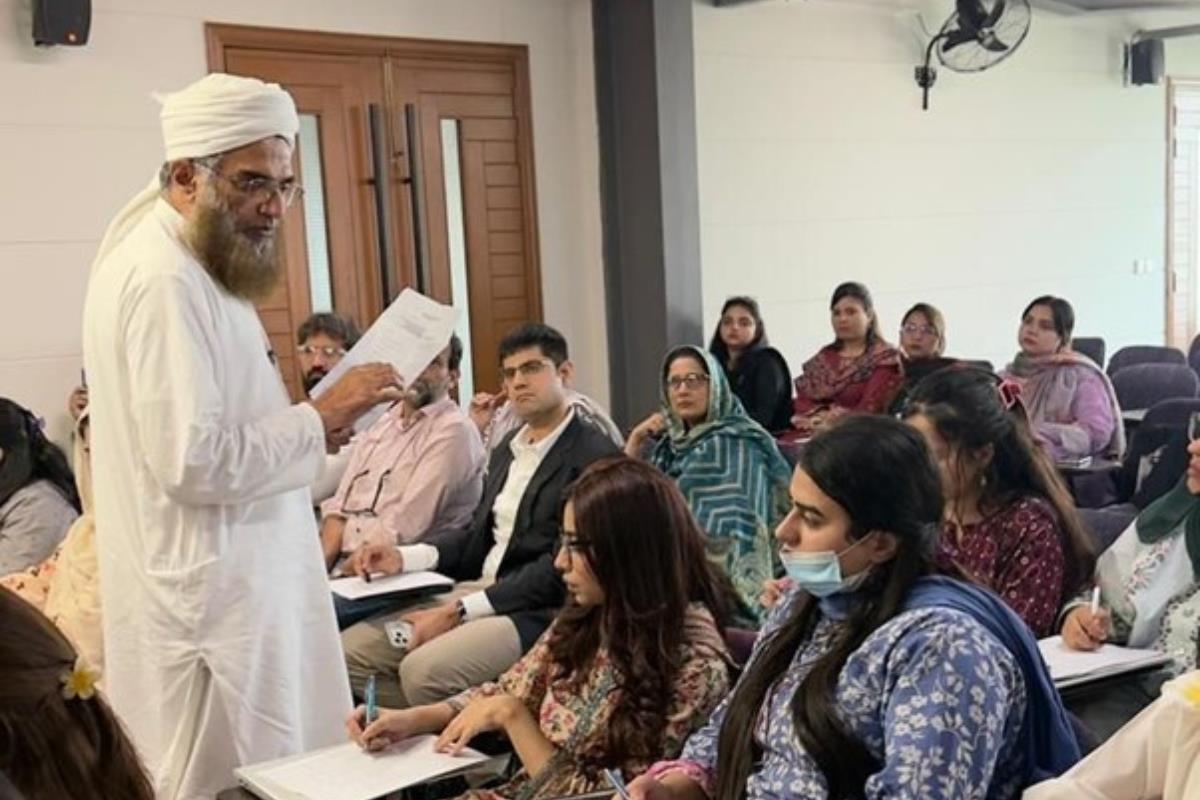
The session featured a range of interactive activities, collaborative exercises, and group discussions designed to allow faculty members to experience the flipped classroom model firsthand. Participants explored practical strategies for increasing classroom participation while encouraging students to think critically, communicate effectively, and engage more confidently with academic material.
The workshop was conducted by Dr Arif Rana (Pro Rector, CSDL), alongside Dr Afia Khalid (Head, CSDL). Their discussions focused on the evolving role of educators in contemporary learning spaces, particularly within classrooms increasingly shaped by student-centred approaches and interactive pedagogy.
Importantly, the session also encouraged full participation from the faculty members of CSDL, creating a collaborative environment in which attendees contributed actively throughout the workshop. The collective engagement transformed the session from a traditional training exercise into a shared exploration of innovative teaching practices.
What distinguished the workshop was its emphasis on reimagining the purpose of classroom interaction itself. Rather than viewing students as passive recipients of information, the training highlighted the importance of creating educational spaces where learners analyse, question, collaborate, and apply knowledge in meaningful ways.
Beyond methodology, the workshop reflected a broader shift taking place within higher education: the recognition that future-ready learning requires more than content delivery alone. It requires environments that cultivate curiosity, adaptability, and independent thinking.